Osho Says
Live Meditation Sessions
Know About Online Sessions


Osho Meditative Therapies
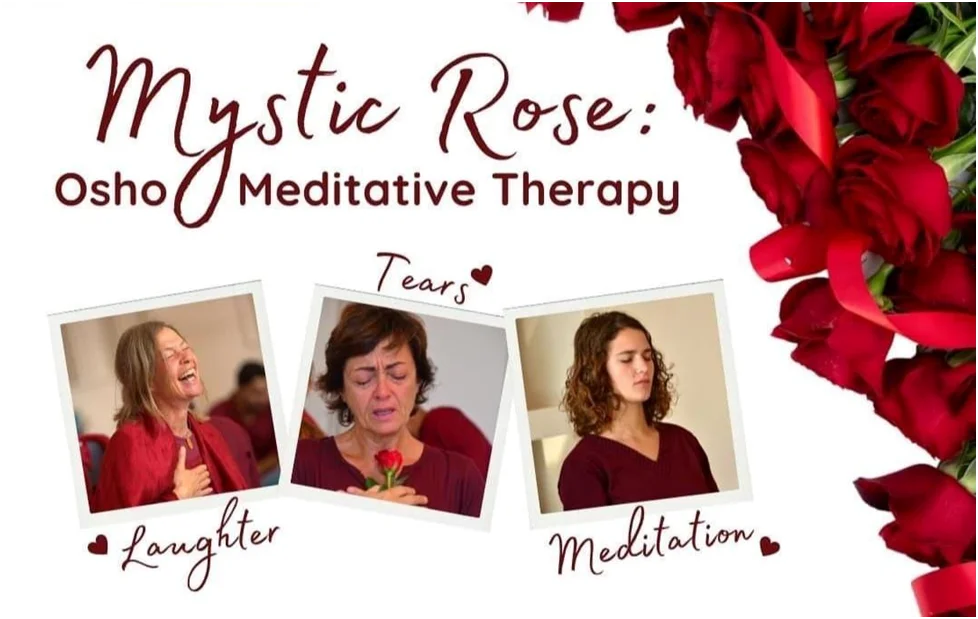
Mystic Rose Therapy

Born Again Therapy
No Mind Therapy
What Our Participants Say

Kajal Singh
I joined Swamiji’s meditation camp, and it was a truly beautiful experience. It felt like living my childhood again — so simple, joyful, and full of life. The camp leaves behind a deep sense of peace and liveliness that continues to stay within. I also joined the evening White Robe meditation, which was equally powerful and calming. The whole experience, connected to Osho’s vision, helped me reconnect with myself and filled me with a fresh sense of clarity and joy. Truly a soulful and life-enriching journey.
Yogesh Jain
Osho Online is a truly divine platform for meditation lovers. The way they organize and guide online meditation sessions is outstanding — full of energy, awareness, and joy. Each session feels deeply healing and transformative, even though it’s online. The facilitators are compassionate and very experienced, creating a peaceful space to relax and reconnect with yourself. I feel calmer, more centered, and grateful after every session. Highly recommended to everyone who wishes to experience Osho’s meditations authentically. Special Thanks to Swami Atmo Ninad.
Rajan Melathil
I have about 5 years experience with Osho online organization. The facilitator Sw. Atmo Ninad is doing a great job of spreading awareness amongst the seekers based on Osho's teachings. By listening his daily evening and other online meditation programs a seeker will surely become able to know where he stands. So, naturally he will change his old routine path and become aware of himself. All those who wish to liberate from the clutches of the society should join in his ongoing meditation camps / online programs. Thanks
Vandana Kukreja
Osho online sandhya satsang is blessing for us seniors. swami Ninad started this since lock down and is continuing it. Singing dancing and listening to Osho on zoom we all feel connected to our Beloved master. A very meditative experience. Thanks Swami ji for you loving efforts.
Posted on GoogleTrustindex verifies that the original source of the review is Google. ExcellentPosted on GoogleTrustindex verifies that the original source of the review is Google. Swami Ninad is doing excellent work in promoting Bhagwan Shree Rajneesh's meditations by conducting online Evening Satsang for many years now. Wish him love ❤️Posted on GoogleTrustindex verifies that the original source of the review is Google. An amazing online platform to understand the true meaning of meditation which leads to celebration🧘❤️ ✌️🕊️Posted on GoogleTrustindex verifies that the original source of the review is Google. Amazing, beyond words,and blessed with OSHO meditationPosted on GoogleTrustindex verifies that the original source of the review is Google. मैं चला जाउंगा पर जो मैं कर रहा हूं,वह जारी रहेगा। मेरे बोये बीज कल नये फूल खिलाएंगे। उनकी सुगंध उठेगी और नए लोगों के नासापुटों में प्रवेश करेगी। बस तुम खुले रहना! एकबार मैं देह मुक्त हुआ तो मेरी चेतना विश्वव्यापी हो जाएगी। उसके बाद तुम्हें मुझे खोजने की जरूरत नहीं रह जाएगी। मैं अपने लोगों में विलीन हो जाऊंगा।तुम जहां भी होओगे मैं उपलब्ध रहूंगा।यह तुम पर निर्भर है कि तुम खुले रहो और ग्रहण करो।....क्योंकि जब तक तुम खुले होते हो तो तुम मुझमें शामिल होते हो, तुम मुझे ग्रहण कर सकते हो। तुम जब हंसते हो तो मैं हंसता हूं, तुम नाचते हो तो मैं नाचता हूं, मुझे अलग से नाचने की जरूरत नहीं, तुम्हारे कंठ मेरे कंठ है। और मैं अपने जाने के बाद तुम्हारे कंठ से बोलूंगा। फिर कोई कानून, कोई संसद, कोई देश मेरे लिए बाधाएं खड़ी न कर सकेंगे। ओशो स्वामी आत्मो निनाद ओशो के उपर्युक्त संदेश का पूर्णत: माध्यम् बन रहे हैं। स्वामी आत्मो निनाद जी को वंदन।Posted on GoogleTrustindex verifies that the original source of the review is Google. Doing wonderful work. Keep it up 💐Posted on GoogleTrustindex verifies that the original source of the review is Google. बहुत शानदार
FAQs
Meditation is a simple process of watching your own mind. Not fighting with the mind. Not trying to control it either. Just remaining there , a choice less witness. Whatsoever passes you simply take note of it. With no prejudice for or against.
Meditation is a way of settling in oneself, at the innermost core of your being. Once you have found the center of your existence, you will have found both your roots and your wings. The roots are in existence, making you a more integrated human being, an individual. And the wings are in the fragrance that is released by being in contact with existence. The fragrance consists of freedom, love, compassion, authenticity, sincerity, a sense of humor, and a tremendous feeling of blissfulness. The roots make you an individual, and the wings give you the freedom to love, to be creative, to share unconditionally the joy that you have found. The roots and wings come together. They are two sides of one experience, and that experience is finding the center of your being. We are continuously moving on the circumference, always somewhere else far away from our own being, always directed towards others. When all this is dropped, when all objects are dropped, when you close your eyes to all that is not you –even your mind, your heartbeats are left far behind – only a silence remains.
In this silence you will settle slowly into the center of your being, and then the roots will grow on their own accord, and the wings too. You need not worry about them. You cannot do anything about them. They come on their own.
You simply fulfill one condition: that is, to be at home – and the whole existence becomes a bliss to you, a benediction.
Osho: The Osho Upanishad, #9
The inner revolution brings freedom and the only way to make oneself go through the inner revolution is meditation. Meditation simply means learning to forget all that you have learned. It is a process of deconditioning, a process of dehypnosis. The society has burdened everybody with thousands of thoughts. Meditation simply helps you to come out of that world of thoughts, into a state of silence. It is a process of cleaning your slate completely, it is emptying all that has been forced and stuffed inside you. Once you are empty, spacious, silent, clean, the revolution has happened, the sun has risen; then you live in its light! And to live in the light of your inner sun is to live rightly. In fact that is the only way to live. Others are only dying, just dying slowly, moving in a queue that goes on becoming shorter and shorter every moment, and any moment you may be the first in the queue. In fact everybody is trying to be first in the queue; a great desire to be the first everywhere. The ordinary life is only called life – it is not. It is only so-called life. It is a process of gradual death or to be more accurate, a process of gradual suicide. The moment you become silent and aware and clear and your inner sky is full of delight, you know the first taste of true life. One can call it god, one can call it enlightenment, one can call it liberation; the experience of truth, love, freedom, bliss – different names but the phenomenon is the same.
The new age movement is just a fashion which will disappear very soon, as all your other movements have disappeared. Now you don't see hippies.... It is a very great phenomenon that so many hippies suddenly disappeared. What happened to their revolution? It was a revolutionary movement; it was dropping out of the society. Why have they dropped back into the society? All these movements are very short-lived. They have beautiful names ¯ that does not matter ¯ but they don't have a radical philosophy to change human beings. The new age movement has nothing unique which can transform individuals. It is a fashion; soon it will die ¯ just a passing phase. I am not part of any movement. What I am doing is something eternal. It has been going on since the first man appeared on the earth, and it will continue to the last man. It is not a movement, it is the very core of evolution. So you are right that you don't count me as part of the new age movement. I am not. I am part of the eternal evolution of man. The search for truth is neither new nor old. The search for your own being has nothing to do with time. It is non-temporal. I may be gone, but what I am doing is going to continue. Somebody else will be doing it. I was not here and somebody else was doing it. Nobody is a founder in it, nobody is a leader in it. It is such a vast phenomenon that many enlightened people have appeared, helped and disappeared. But their help has brought humanity a little higher, made humanity a little better, a little more human. They have left the world a little more beautiful than they had found it.
Osho, Socrates Poisoned Again After 25 Centuries, Talk #11
The ignorant person can remember that he is ignorant – he has nothing to lose. But the learned, he cannot recognize that he is ignorant. He has much to lose. The knowledgeable person is the real fool. The ignorant person is innocent; he knows that he knows not, and because he knows that he knows not, because he is ignorant, he is just on the threshold of wisdom. Because he knows he knows not, he can inquire, and his inquiry will be pure, unprejudiced. He will inquire without any conclusions. He will inquire without being a Christian or a Hindu. He will simply inquire as an inquirer. His inquiry will not come out of ready-made answers, his inquiry will come out of his own heart. His inquiry will not be a by-product of knowledge, his inquiry will be existential. He inquires because it is a question of life and death to him. He inquires because he really wants to know. He knows that he knows not – that's why he inquires. His inquiry has a beauty of its own. He is not a fool, he is simply ignorant. The real fool is one who thinks he knows, without knowing at all.
Osho, The Dhammapada: The Way of the Buddha, Vol 2, Talk
One has to do something in life. Somebody is a carpenter and somebody is a king, and somebody is a businessman and somebody is a warrior. These are ways of livelihood, these are ways of getting bread and butter, a shelter. They can't change your inner being. Whether you are a warrior or a businessman does not make any difference: one has chosen one way to earn his livelihood, the other has chosen something else.
Meditation is life, not livelihood. It has nothing to do with what you do; it has everything to do with what you are. Yes, business should not enter into your being, that is true. If your being also has become businesslike, then it is difficult to meditate and impossible to be a sannyasin...because if your being has become businesslike, then you have become too calculative. And a calculative person is a cowardly person: he thinks too much, he cannot take any jumps. And meditation is a jump: from the head to the heart, and ultimately from the heart to the being. You will be going deeper and deeper, where calculations will have to be left behind, where all logic becomes irrelevant. You cannot carry your cleverness there.
In fact, cleverness is not true intelligence either; cleverness is a poor substitute for intelligence. People who are not intelligent learn how to be clever. People who are intelligent need not be clever; they are innocent, they need not be cunning. They function out of a state of not-knowing. If you are a businessman, that's okay. If Jesus can become a meditator and a sannyasin, and ultimately a christ, a buddha... and he was the son of a carpenter, helping his father, bringing wood, cutting wood. If a carpenter's son can become a buddha, why not you?
Osho
Youth is the best time for inner transformation because youth is the most flexible time. Children are more flexible than young people, but they are not so understanding. They need a little experience. Youth is exactly the middle; you are no longer a child, no longer ignorant of life and its ways and not yet settled as an old man. You are in a state of transition, and the state of transition is the best time that you can jump out of the wheel of life and death. Youth is the most significant time to take any jump, because the jump needs courage, it needs energy, it needs risk, it needs daring.
Osho
Everybody is in need of meditation. Everybody is starved of it. Particularly as one grows older in life, more and more is the necessity felt. Of course people have completely forgotten the language of it. They cannot even form the right question about what is missing. They simply feel that something is missing; they don't know what. They are bewildered by it. They may have everything. One may have arrived in worldly ways, succeeded, but by the time that one reaches the age of forty-two, one starts feeling that something is missing. Forty-two is just like the age of fourteen. At the age of fourteen you start feeling that something is missing. The sexual partner is missing; the man or the woman is missing. Suddenly you feel that you are alone, incomplete. You need somebody to complement and complete you. A great desire arises to move into love. Exactly the same happens at the age of forty-two. Again one has matured ¯ deeper than the maturity that comes at fourteen. That was physical maturity; one was ready to make love physically. Forty-two is the age when one is psychologically mature, and is ready to make love psychologically. That's what meditation is all about. Because in the West people have completely forgotten ¯ and Christianity has never talked about meditation, but at the most about prayer, which is a very diluted form, which doesn't work much ¯ when people become older, when they come to the middle of their life, suddenly they feel a haunting, that something is missing; what is it? They cannot even pinpoint it. They cannot put their finger on it: 'This is what is missing.'
People start drifting at the age of forty-two. They think this wife is not fulfilling because they know only one experience. At the age of fourteen there was a haunting of sexuality. Maybe again this wife is not satisfying, this man is not satisfying. So they swap wives, swap husbands, make group sex. There is only one language, and that is of sex. Or they start thinking that they need more money, a bigger house, bigger cars, because that is the whole logic they have been living by and they cannot find any satisfaction through it. They go on and on and on until they simply fall down dead and die. But meditation is as natural an urge as sex. It has its own time.
Osho
Many people come to me and they say they are unhappy, and they want me to give them some meditation. I say: First, the basic thing is to understand why you are unhappy. And if you don't remove those basic causes of your unhappiness, I can give you a meditation but that is not going to help very much ¯ because the basic causes remain there. The man may have been a good, beautiful dancer, and he is sitting in an office, piling up files. There is no possibility for dance. The man may have enjoyed dancing under the stars, but he is simply going on accumulating a bank-balance. And he says he is unhappy: Give me some meditation.... I can give him! ¯ but what is that meditation going to do? what is it supposed to do? He will remain the same man: accumulating money, competitive in the market. The meditation may help in this way: it may make him a little more relaxed to do this nonsense even better. That's what TM is doing to many people in the West ¯ and that is the appeal of transcendental meditation, because Maharishi Mahesh Yogi goes on saying, 'It will make you more efficient in your work, it will make you more successful. If you are a salesman, you will become a more successful salesman. It will give you efficiency.' And American people are almost crazy about efficiency. You can lose everything just for being efficient. Hence, the appeal. Yes, it can help you. It can relax you a little ¯ it is a tranquillizer. By constantly repeating a mantra, by continuously repeating a certain word, it changes your brain chemistry. It is a tranquillizer, a sound-tranquillizer. It helps you to lessen your stress so tomorrow in the marketplace you can be more efficient, more capable to compete ¯ but it doesn't change you. It is not a transformation. You can repeat a mantra, you can do a certain meditation; it can help you a little bit here and there ¯ but it can only help you to remain whatsoever you are. Hence, my appeal is only for those who are really daring, dare-devils who are ready to change their very pattern of life, who are ready to stake everything ¯ because in fact you don't have anything to put at the stake: only your unhappiness, your misery. But people cling even to that. What else do you have to put at stake? Just the misery. The only pleasure that you have is talking about it. Look at people talking about their misery: how happy they become! They pay for it: they go to psychoanalysts to talk about their misery ¯ they pay for it! Somebody listens attentively; they are very happy. People go on talking about their misery again and again and again. They even exaggerate, they decorate, they make it look bigger. They make it look bigger than life-size. Why? You have nothing to put at stake. But people cling to the known, to the familiar. The misery is all that they have known ¯ that is their life. Nothing to lose, but so afraid to lose anything. With me, happiness comes first, joy comes first. A celebrating attitude comes first. A life-affirming philosophy comes first. Enjoy! If you cannot enjoy your work, change it. Don't wait, because all the time that you are waiting you are waiting for Godot. Godot is never going to come. One simply waits ¯ and wastes one's life. For whom, for what are you waiting? If you see the point, that you are miserable in a certain pattern of life, then all the old traditions say: You are wrong. I would like to say: The pattern is wrong. Try to understand the difference of emphasis . You are not wrong! Just your pattern, the way you have learned to live is wrong. The motivations that you have learned and accepted as yours are not yours ¯ they don't fulfill your destiny. They go against your grain, they go against your element.... Remember it: nobody else can decide for you. All their commandments, all their orders, all their moralities, are just to kill you. You have to decide for yourself. You have to take your life in your own hands. Otherwise, life goes on knocking at your door and you are never there; you are always somewhere else.
If you were going to be a dancer, life comes from that door because life thinks you must be a dancer by now. It knocks there but you are not there ¯ you are a banker. And how is life expected to know that you would become a banker? The divine comes to you the way it wanted you to be; it knows only that address – but you are never found there, you are somewhere else, hiding behind somebody else's mask, in somebody else's garb, under somebody else's name.
The divine can find you only in one way, only in one way can it find you, and that is your inner flowering: as it wanted you to be. Unless you find your spontaneity, unless you find your element, you cannot be happy. And if you cannot be happy, you cannot be meditative.
Why did this idea – that meditation brings happiness – arise in people's minds? In fact, wherever they found a happy person they always found a meditative mind. They become associated. Whenever they found the beautiful, meditative milieu surrounding a man, they always found he was tremendously happy ¯ vibrant with bliss, radiant. They became associated. They thought: Happiness comes when you are meditative.
It was just the other way round: meditation comes when you are happy. But to be happy is difficult and to learn meditation is easy. To be happy means a drastic change in your way of life, an abrupt change ¯ because there is no time to lose. A sudden change, a sudden clash of thunder...a discontinuity.
That's what I mean by sannyas: a discontinuity with the past. A sudden clash of thunder, and you die to the old and you start afresh, from ABC. You are born again. You again start your life as you would have done if there had been no enforced pattern by your parents, by your society, by the state; as you would have done, must have done, if there had been nobody to distract you. But you were distracted. You have to drop all those patterns that have been forced on you, and you have to find your own inner flame.
Osho
Problems are all around you. So even if you somehow get finished with one problem, another problem arises. And you cannot prevent problems arising. Problems will continue to arise till you come to a deep understanding of witnessing. That is the only golden key, discovered by centuries of inward search in the East: that there is no need to solve any problem. You simply observe it, and the very observation is enough; the problem evaporates.
I have dissolved any religious connotation – a Hindu can remain a Hindu and still meditate – to make meditation available to all without any condition, whether he is Hindu, Jew, Christian…. Anybody can participate. The beauty is that if somebody meditates, sooner or later his Hinduism will disappear. It cannot remain with meditation. So why bother about Hinduism when we have a secret which will automatically disperse all darkness in their minds? I want meditation to become almost universal. It can become universal only if it is not attached to any religion, to any politics, to any ideology – and it is not. It is a simple method. Even an atheist can do it; there is no problem. We don’t ask him to believe in God, we don’t ask him to believe in anything. We simply say to him, 'Here is a method you can try. Hypothetically, if you find something, good. If you don’t, drop it.' And anybody who has tried meditation has never come back empty-handed.
Osho
Ten non-commandments:
The first: freedom.
The second: uniqueness of individuality.
The third: love.
The fourth: meditation.
The fifth: non-seriousness.
The sixth: playfulness.
The seventh: creativity.
The eighth: sensitivity.
The ninth: gratefulness.
Tenth: a feeling of the mysterious.
These ten non-commandments constitute my basic attitude towards reality, towards man's freedom from all kinds of spiritual slavery.
Osho
No need of any special arrangements except a good internet/wi-fi connection along with a quality
Speaker is necessary and sufficient to attend these online programs.
There is no age limit to join these online meditation programs . Just a person should mature enough to understand the instructions given by facilitators.
There is no age limit to join these online meditation programs . Just a person should mature enough to understand the instructions given by facilitators.
Yes, you may ask your questions during as well as after the completion of the particular session. The sessions will be mutually interactive.